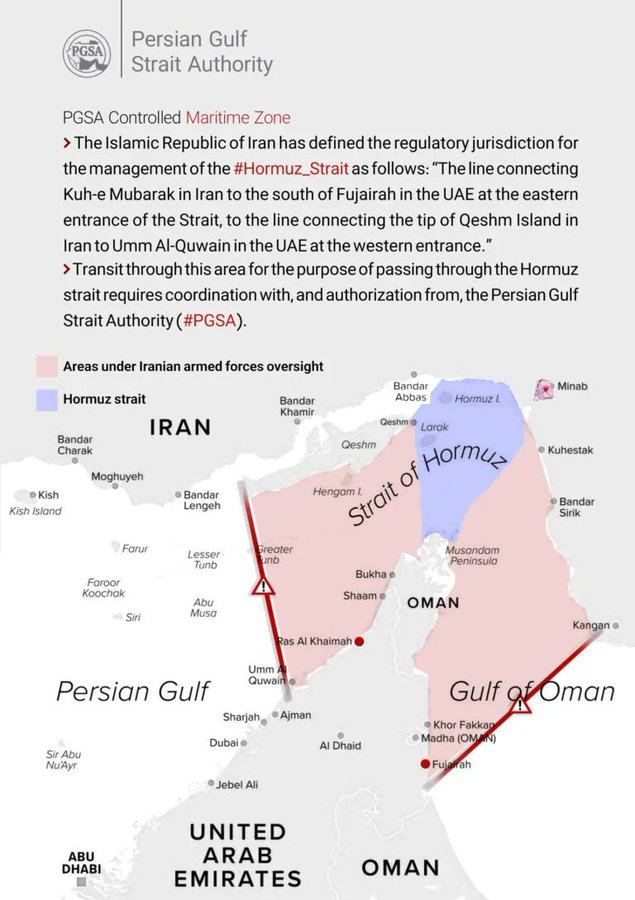
   As I wrote in “Persian Gulf; Departure Point”, no further negotiations or mutual agreements can or will be made between Iran and its opponents. The constant flow of reports on ‘progress’ in talks and even suggestions that an agreement is close bear no relation to the reality, and is being generated by individuals and groups allied to the US, some of whom may even believe such ‘progress’ is still possible.

 Iran has repeatedly pointed out that ‘there is no trust’ in anything proposed by the US and allies, in part because of repeated broken promises or supposed agreements. Those who broke the agreements in the most spectacular way – by bombing and killing Iranians in the ’12-day war’ and the ’39-day war’, do not even acknowledge the betrayal, nor consider it a block to further negotiations, while continuing to make the same unreasonable demands on Iran that were already rejected.

 It could be said that Iran ‘has no partner for peace’ , if this framing of conflict by the aggressor had a less contentious origin; in the israeli tradition of reversing reality, Netanyahu frequently claimed the Zionists had no ‘partner for peace’ in the Palestinian Authority to justify israel’s continuing attacks on Palestinians; it does of course take two to make peace, and israel never wanted it, while the Palestinians had no interest in making peace with the occupying power stealing their land and killing their children.

 In fact, Iran is faced with a similarly two-faced and endlessly aggressive enemy, who also uses the same false framing to justify ongoing threats and attacks. This takes the form of claims that the Iranian leadership is divided – that those who want ‘peace’ with the aggressors are being suppressed by ‘the hardliners’. It fails to acknowledge that those ‘hardliners’ are simply determined and resolute Iranians who refuse on principle to make any concessions to the Zionists; those Iranians who would consider such a betrayal of Iran’s sovereignty and independence have either been seduced by offers or subjected to blackmail – or live in the diaspora.

  What all this means, in the context of the most pressing issue – the Strait of Hormuz – is that the world is now fracturing into ‘friends’ and ‘enemies’ of Iran, and the political and economic conditions of these two groups will very soon diverge sharply.

  The latest reports from Iran indicate that their proposed rules of transit through the Strait have now become reality, as defined by the new Persian Gulf Straight Authority. The conditions and structure of this arrangement – which has evidently received support from Oman for its proper implementation – are straightforward and not contentious; the application of a ‘toll’ which has been so controversial in the West has been legitimised as an ‘environmental charge’, provision of security and insurance. As has been pointed out by Alastair Crooke in this interview with Daniel Davis, such charges are standard for passage through Suez or Panama, as well as normal for autoroutes.

 It also appears that the charges levied will depend on the nature of the cargo and country of destination – so close friends and allies of Iran such as China will not be expected to pay a levy. (though clearly such a charge may be incorporated in the price of the goods being exported; many nuances are possible, for instance in Iranian oil being paid for in Chinese Yuan, or in Iranian Rials.)

 Already ships are transiting the Strait in greater numbers than since February, and we may expect more to follow. Countries who have an ideological or political objection to Iran will soon overcome it faced with the consequences of energy deprivation, and no alternative options, even if a levy must be paid. At the same time those countries with Iran’s blood on their hands – those who collaborated actively with the US and israel, or who supported the initial attacks and the killing of the Supreme Leader – will have to ‘watch and weep’, while fighting amongst themselves over dwindling supplies and looking for retribution and scapegoats.

 Iran may demonstrate that it will not be on the target list of such countries, particularly if the US goes ahead with a ‘limited strike’ – as is in the immediate offing. The Iranian leadership has repeatedly stated and made clear that the consequences of any such attack will be out of proportion, and cause the opponent to regret ‘poking the lion’. Rather than soften its stance with minor concessions that would allow the US to give in gracefully, Iran has responded to the US’ complete failure to even recognise Iranian demands by widening its target list.

 Iran may well also be adjusting potential targets according to their response – for instance from Qatar and Saudi Arabia, and in consideration of the wider global consequences; destroying power networks in the UAE would be catastrophic for the region and global energy supplies, and might alienate allies as well as enemies, even though the UAE must remain a prime target alongside ‘Israel’.

 The situation is very unstable however, and changing by the hour. Claims from Western media that the US and Iran have agreed on a Memorandum of Understanding cannot be confirmed, and seem impossibly unlikely, other than to understand that the red lines and demands of both parties do not intersect at any point. To make such an agreement requires concessions from the US and israel on EVERY point in Iran’s original 10-point plan, so their refusal to concede on a single issue makes it unworkable. Whether that is Iran’s right to enrich and store Uranium, or the unconditional and immediate end of ALL sanctions, US refusal to concede on these points negates any agreement.

 As it is, and as stated repeatedly by Marco Rubio, the US ‘red lines’ include issues like Uranium enrichment and ballistic missiles, both of which are non-negotiable for Iran, and in any case are matters on which Iran has sovereign rights. It is some sort of theatre of the absurd, when everyone knows these are ‘Israel’s’ demands and the primary stated reason for the Israeli-led attack on Iran.

 In addition to those long-standing demands - the basis on which the punishing and illegal sanctions on Iran have been pursued for decades - there is the issue of the Strait of Hormuz and the US blockade, which Iran reasonably considers to be an act of war. The position of the US and all its Western allies on the two blockades is very contradictory, as the US is effectively responsible for both of them, and the global consequences of the strangulation of traffic to and from all the states in the Persian Gulf.

   In the first instance, Iran was only indirectly responsible for stopping oil tankers and other shipping passing through the Strait, with the direct reason being that maritime companies and their insurers were not prepared to transit the passage and risk hitting mines or being targeted by Iranian missiles, even though there was no evidence Iran had placed mines in the Strait. The wider reason was simply that drones and missiles were flying in both directions, and accidents were possible.

   However, the blockade subsequently imposed and enacted by the US made matters far worse, threatening shipping of other countries apart from Iran, while doing nothing to enable US friendly traffic through the Strait. America's lawless extra-territorial actions helped to reduce traffic to single figures - though that traffic was almost exclusively connected to Iran. The adoption of the opening of the Strait of Hormuz as one of the US' primary demands is consequently rather stupid; the US created this problem and can also solve it - given Iran has already opened its part of the Strait to approved traffic.
As before, the situation is changing fast, so updates must follow…
DM 24th May 2026